How accepting cash retained over 25% of Tripsome's partners
Tripsome was behind on partner payouts. Instead of asking partners to wait, we changed how money flowed through the marketplace.
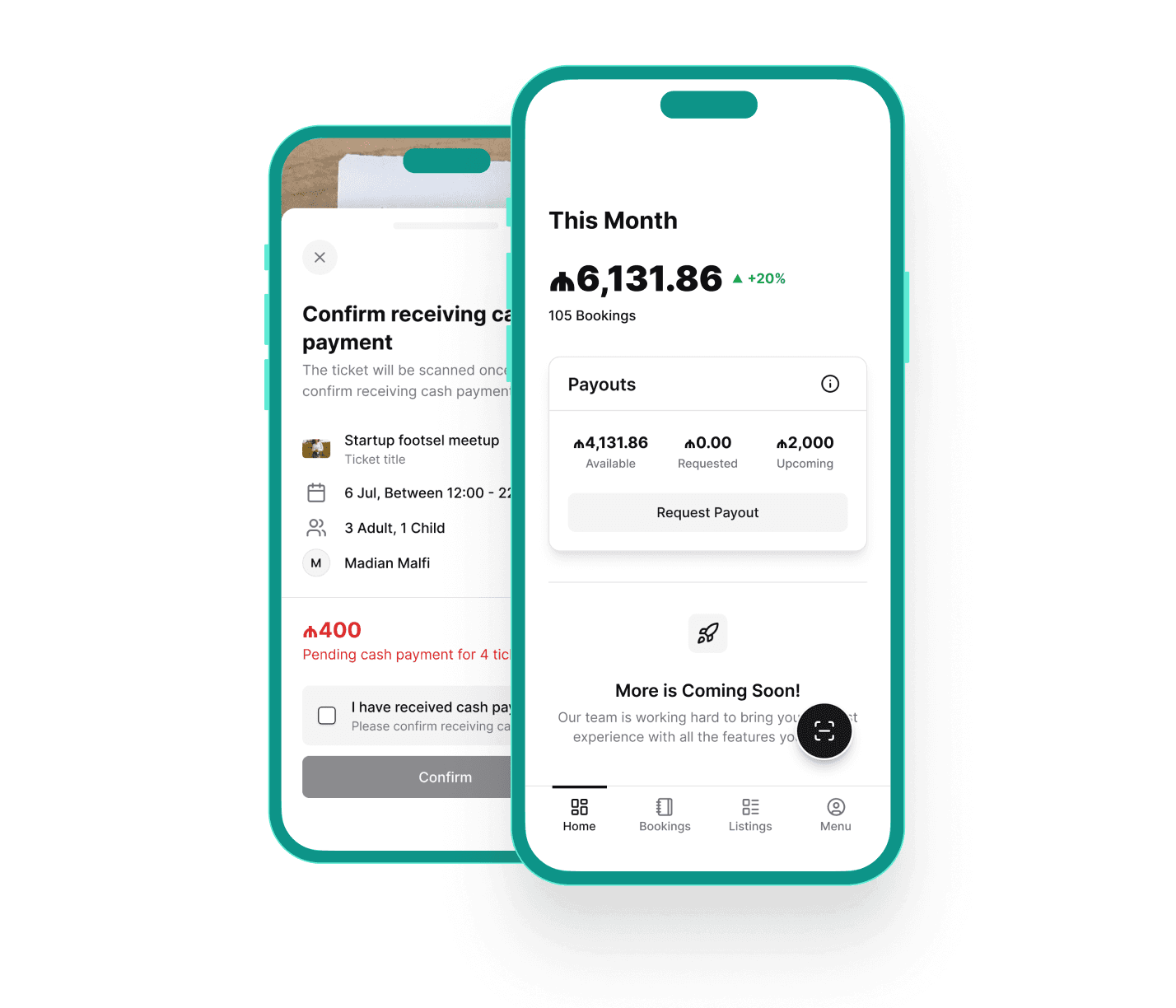
Overview
Every online booking made the debt worse.
Tripsome collected the customer's payment, but delayed payouts meant each booking increased what it owed partners. We needed to keep partners earning without stopping bookings.
Problem
- Tripsome owed partners money because payouts were late.
- Trust was breaking and partners were starting to leave.
- Partners still needed support for basic tasks.
How it started
I rejected an all-in-one calendar
The team believed a calendar with management tools would help partners work independently and rebuild trust.
I designed a prototype and asked the tech team to estimate the work. It would take far too long to build.
But it still did not solve the main problems: partners wanted to get paid, see what Tripsome owed them, and handle cash.
The prototype helped us stop before we built the wrong product.
Research
What support feedback revealed
Support's daily conversations with partners revealed two consistent patterns: more than 95% relied on their phones while operating throughout the day, and customers regularly asked to pay in cash.
Exploring a simpler direction
I simplified the desktop and mobile concepts around those signals. These are a few of the directions I explored before defining the MVP.
What changed the plan
- More than 95% of partners relied on their phones.
They were operating throughout the day, so desktop did not fit how they worked.
- Customers wanted to pay in cash.
Cash gave partners a way to keep earning while Tripsome worked through the debt.
Solution
Partners get paid immediately. Tripsome reduces its debt.
Each cash booking created a simple loop that helped partners stay and gave Tripsome room to keep operating.
Customer pays the partner
Cash goes straight to the partner.
Partner keeps our commission
Nothing is sent back to Tripsome.
We reduce the debt
We subtract the commission from what Tripsome owes.
Both keep operating
The partner gets paid while Tripsome reduces its debt.
I cut the MVP around that model.
We removed advanced analytics, complex scheduling, and desktop.
Cash tracking and payout visibility came first.
Severity-based prioritization kept cash tracking and payout visibility in the MVP.
What we shipped
Four core actions. Nothing more.
- See earnings and bookings
Check bookings, earnings, and payout balances.
- Confirm cash payments
Scan a ticket and record the payment.
- Review missed bookings
Flag tickets that were not scanned.
- Request and track payouts
See what is available, request it, and follow its status.
The core mobile flow connected scanning, bookings, and exception handling.
The payout flow covered balances, bank details, requests, and status updates.
See what you've earned
Partners could check earnings, bookings, and payout balances without messaging support.
Record a cash payment
Scan the ticket and confirm that the customer paid.
Review missed bookings
If a ticket was not scanned, it appeared for review.
Request and track a payout
Partners could see what was available, request it, and follow its status without contacting support.
Reflection
Cash payments helped retain more than 25% of Tripsome's partners.
Partners received money right away while each cash booking reduced what Tripsome owed them.
What I would do differently
- Bring partner and support feedback into planning earlier.
- Push back on extra features when they do not solve the main problem.