From E-commerce to Smart Living
Vettons was growing beyond e-commerce into smart-home rentals. I led the super-app and IoT direction and contributed to the booking journey.
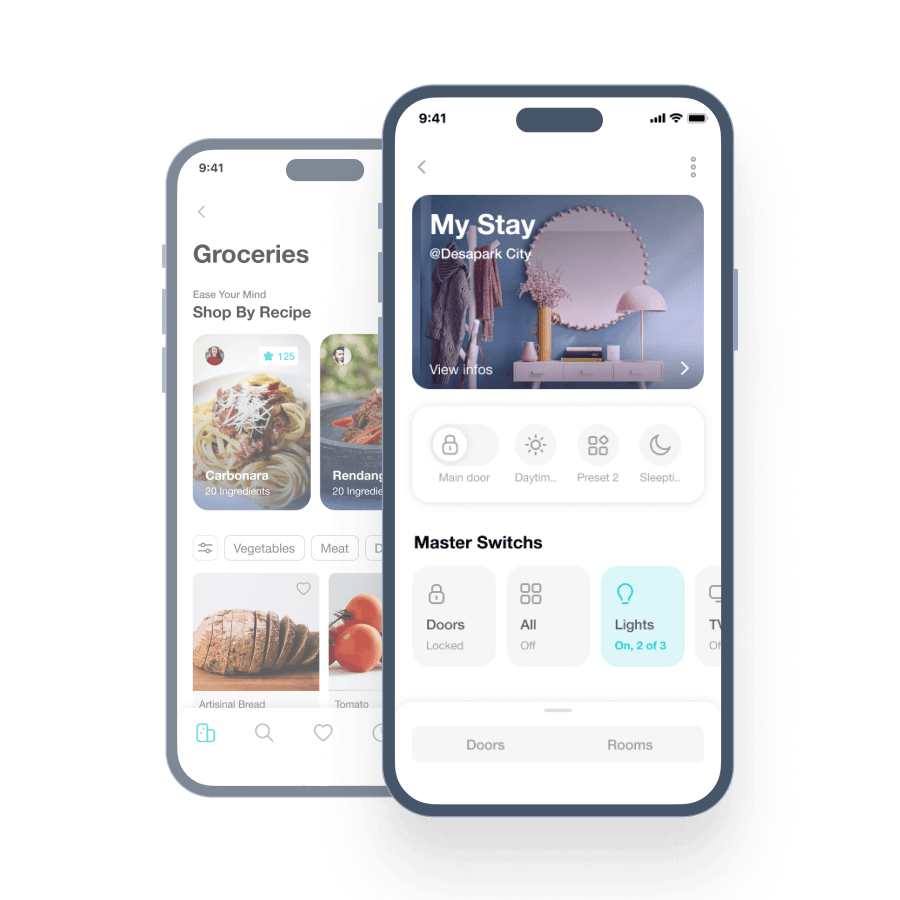
Overview
Vettons was moving beyond shopping.
Smart Stays would add rentals, home control, utilities, and everyday services to the existing marketplace.
As UX Principal, I led the design team and owned the super-app and IoT direction. I contributed to early booking flows.
Problem
Three challenges shaped the work.
- Rental hesitation
Deposits were a barrier. Listings did not always match reality.
- A new rental model
Renting was familiar. App-controlled homes were not.
- One growing ecosystem
Smart Stays had to fit Vettons without feeling like a separate app.
Research
We studied future renters.
Interviews and focus groups showed what renters valued: location, affordability, transport, and nearby amenities.
Renters wanted fewer surprises.
Focus groups confirmed why people moved, what they compared, and what made them hesitate.
- Pain points
Deposits, misleading listings, separate bill payments, and difficult move-in or move-out.
- Motivations
A new job, marriage, or a growing family.
- Decision factors
Location, transport, proximity to work, affordability, and nearby amenities.
Smart-home rentals were a new idea.
Renting was familiar. Controlling a rented home through connected devices and an app was not.
Solution
We organized the work in three moves.
Build the stay journey. Extend it into the home. Tie everything together.
Build Smart Stays
Connect discovery, viewing, and booking.
Extend the stay
Add home control, utilities, and local services.
Create the ecosystem
Connect Shop and Stay through shared IA and components.
Smart living had to feel simple.
Three principles guided the experience.
- Ready from day one
Preconfigure controls before check-in.
- Easy to understand
Group devices by room and familiar actions.
- Clear before booking
Show pricing, viewings, contracts, and move-in details.
Why one ecosystem needed three layers.
A flat structure treated Shop and Stay like separate apps. Three layers gave each service focus while keeping discovery and personal activity shared.
- Directory
Discover Shop, Stay, and future services.
- Platform
Focus on shopping or managing a stay.
- Quick Access
Reach profile, activity, keys, and home controls.
The architecture connected every layer
Directory connected Shop and Stay. Quick Access kept personal activity within reach.
Design
The journey, end to end.
Every screen supported a moment before, during, or after the stay.
Move across the ecosystem
Switch between stays, shopping, and services in one app.
Stay discovery
Browse available homes and compare options.
Search
Narrow results by location, dates, and preferences.
Stay details
Review the home, total cost, and viewing options.
Book a viewing
Choose a time and track the appointment.
Book a stay
Sign the agreement, pay the deposit, and create an access PIN.
Control the home
App-controlled homes were new, so controls were grouped by room and linked to the active stay.
Manage daily needs
Order groceries and pay utilities from the stay.
Internal foundation
Why a property was not a stay.
A building could contain several bookable units.
Separating Property, Stay, and Owner made pricing, availability, and agreements easier to manage.
- Property management
Physical locations: buildings, complexes, and homes.
- Stay management
Bookable units with pricing, availability, and details.
- Owner management
People and agreements linked to each stay.
Property Management
Track properties, cities, and inventory.
Link the owner and location.
Organize listing media.
Define the property and building structure.
Record shared amenities.
Add structured listing content.
Stays Management
Track status, pricing, owners, and availability.
Connect each unit to its property and owner.
Set pricing, deposits, availability, and rules.
Describe rooms and shared spaces.
Record what each unit includes.
Add searchable descriptions and keywords.
Outcome
A complete direction, paused before launch.
COVID-19 created funding uncertainty, and the initiative stopped before launch.
The work defined the Smart Stays journey, IoT model, service layer, and super-app architecture.
The shared design system also cut concept work by 50%.